Education · Reform · Critical Thinking

Human Photocopier vs Innovative Student: Memorizing vs Understanding · The Death of Critical Thinking

By Dr. ND Lama · June 9, 2026

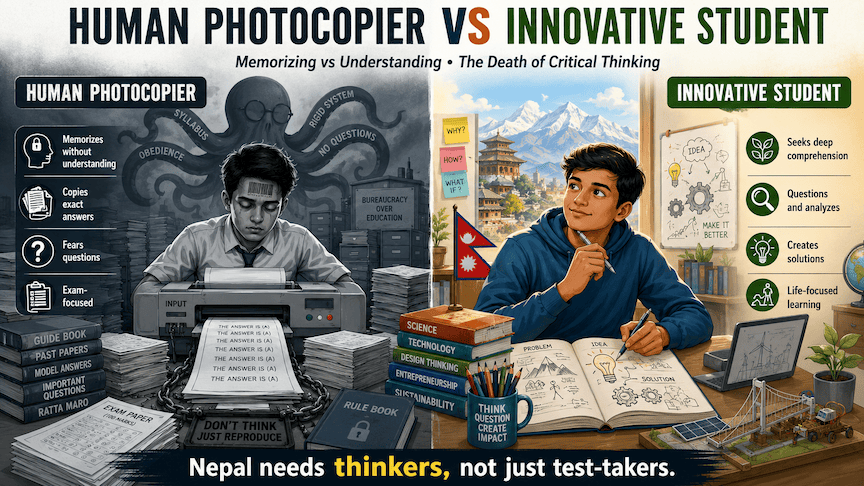
Human Photocopier vs Innovative Student: The contrast between rote learning and creative thinking in education
Nepal needs thinkers, not just test-takers

A Fundamental Problem in Nepal's Education System

I am ND Lama, the author of "Beyond Exams." In that book, I identified five major problems in Nepal's education system. The fourth problem is Memorizing versus Understanding, which I subtitled The Death of Critical Thinking.

In that chapter, I used a powerful conceptual example: the Human Photocopier.

What is a Human Photocopier? It is a student or citizen who copies exactly what the teacher says, what is written in the book, or what answers might appear on an exam—reproducing them word for word. But this person cannot ask questions, cannot analyze, cannot solve problems, and cannot create new things. This is the deep disease of our education system.

Memorizing Student vs Thinking Student

To illustrate this, I created an infographic showing two types of students:

The Human Photocopier memorizes without understanding. The Innovative Student seeks deep comprehension.

The Human Photocopier copies exact answers. The Innovative Student questions and analyzes.

The Human Photocopier fears questioning. The Innovative Student creates solutions.

The Human Photocopier hides behind rules. The Innovative Student understands their purpose.

The Human Photocopier says "This doesn't fit the rules." The Innovative Student asks "How can I solve this problem?"

The Human Photocopier studies to pass exams. The Innovative Student learns to live life, build society, and solve problems.

The Siraha Mobile Phone Incident: A Problem Bigger Than Theft

Recently, news came that during SEE and Class 12 exams in Siraha, approximately 500 mobile phones and smartwatches were confiscated from students, then submerged in water and destroyed. Bringing mobile phones to exams is wrong. Cheating is wrong. Breaking exam discipline is wrong. I am clear on this.

But punishment must also be just.

If a student breaks exam rules, their exam can be cancelled. Disciplinary action can be taken. Parents can be called. Fines can be imposed. Confiscated items can be returned after a period. But does the state or administration have the right to destroy personal property? This is a serious question.

The student made a mistake, not a crime. The answer to a mistake should be education, not brutality. Destroying private property in the name of discipline is not justice.

This incident is not merely about destroyed phones. It is a mirror of our exam system, administrative mentality, and educational culture. It showed that we still place rules above justice. We are still building a system that values obedience over thinking.

Brain-less Octopus: A System That Holds Fast but Offers No Solutions

I sometimes call this kind of product a "Brain-less Octopus."

An octopus's tentacles have many suction points. Wherever they meet something, they stick. Symbolically, the person our education and administration produce sometimes behaves the same way—wherever there is a rule, they stick to it; wherever there is a procedure, they get stuck; wherever there is paperwork, they stop.

They do not ask: "What is the purpose of this rule?" "How can I help the citizen?" "How can I solve this problem?" "How can justice be served?" "How can I improve the student?"

They only say: "It doesn't fit the rules." "There is no order from above." "Who gave you the authority to do this?" "This procedure is not complete."

This mentality is an obstacle to development, not a companion to it.

Exam System and Civil Service Mentality

If Nepal is to stand, two things need deep reform:

First, the exam system must change. Second, the civil service system and administrative selection system must undergo fundamental reform.

We tried to measure life quality through a single paper exam. We limited a student's future to three hours of writing. We asked "How much did you write?" instead of "How much did you understand?" We looked at "What can you memorize?" instead of "What can you create?"

That is why many exam-takers have emerged from our system, but fewer problem-solvers. Many certificate-holders have emerged, but fewer creative citizens. Many rule-followers have emerged, but less wise leadership.

What is Quality?

When I speak of reforming the exam system, even educated people are afraid. Some principals even say, "If SEE disappears, how will we maintain quality?"

But my question is: What is quality?

Is quality simply a student scoring a 4.0 GPA? Is quality not their contribution to society? Is quality not their ability to solve problems? Is quality not their honesty, diligence, way of living, and ability to lift others?

Municipalities give awards to students with 4.0 GPAs. That is good. But we must also ask: Where are those students five years later? Are they capable in life? Can they run a business? Can they understand society's problems? Can they create? Can they stand for justice?

Exams measure some things. But they cannot measure the full potential of life.

What Must We Do Now?

We must not make students memorize; we must teach them to think. We must not intimidate them; we must create an environment for questioning. We must not destroy the student who makes mistakes; we must build a system of improvement. We must produce not mere rule-following employees, but just and discerning citizens.

Cheating is wrong. But injustice in the name of preventing cheating is also wrong.

Bringing a mobile to exam hall is wrong. But destroying a student's personal property is also wrong.

Discipline is needed. But discipline without wisdom becomes oppression, not education.

Conclusion: Nepal Needs Innovative Students, Not Human Photocopiers

Nepal does not need Human Photocopiers. Nepal needs Innovative Students.

Nepal does not need a mind that memorizes; it needs a mind that thinks. Nepal does not need employees stuck to rules; it needs leadership that provides solutions. Nepal does not need a generation that fears; it needs a generation that questions, analyzes, creates, and solves problems.

This is why I wrote "Beyond Exams." It is not simply an anti-exam book. It is written for thinking. It is written for the student's life, society's future, and Nepal's possibility.

If we do not change the exam system, the education system, and administrative thinking, Nepal will continue producing Human Photocopiers.

But if we place understanding, creation, wisdom, and problem-solving at the center of education, Nepal will gain a new generation—one that does not fear but thinks; does not memorize but understands; does not get stuck on rules but seeks justice and solutions.

Now the question stands before us:

Will we make students photocopying machines or builders of the future?
मानव फोटोकपी बनाम सिर्जनशील विद्यार्थी: घोकाइ र बुझाइको विरोधाभास
नेपाललाई परीक्षा दिने होइन, सोच्ने विद्यार्थी चाहिन्छ

शिक्षा व्यवस्थामा मोबाइल नष्ट गर्ने शिक्षा: जब Human Photocopier ले देश चलाउँछ

म Beyond Exams को लेखक एन. डी. लामा हुँ। यस पुस्तकमा मैले नेपालको शिक्षा प्रणालीमा देखिएका पाँचवटा मुख्य समस्याहरू उठाएको छु। तीमध्ये चौथो समस्या हो—Memorizing versus Understanding। यसको उपशीर्षक मैले राखेको छु—The Death of Critical Thinking

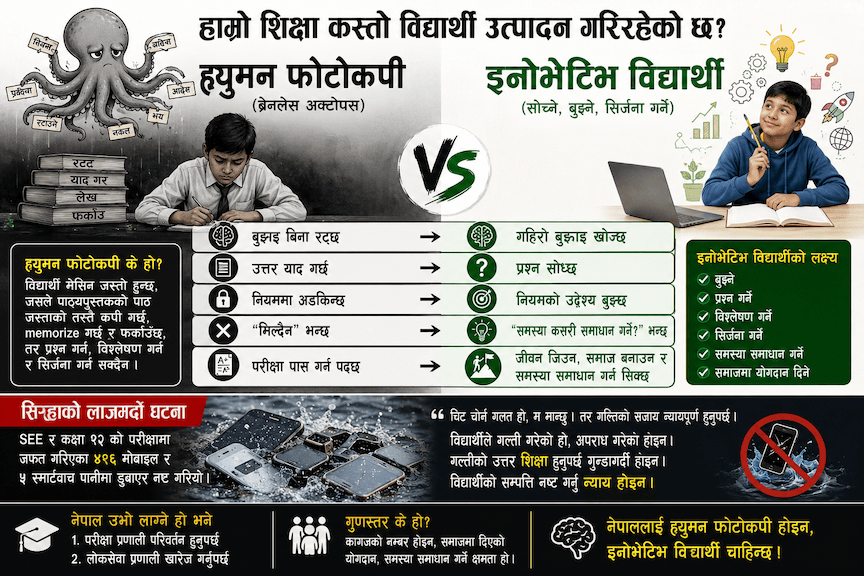
यस अध्यायमा मैले एउटा चित्रात्मक उदाहरण प्रयोग गरेको छु—Human Photocopier

Human Photocopier भन्नाले के बुझिन्छ? यो त्यस्तो विद्यार्थी वा नागरिक हो, जसले शिक्षकले भनेको कुरा, किताबमा लेखिएको कुरा, वा परीक्षामा आउन सक्ने उत्तरहरू जस्ताको तस्तै कपी गर्छ, घोक्छ, लेख्छ र फेरि उस्तै रूपमा फर्काउँछ। तर ऊ प्रश्न गर्न सक्दैन, विश्लेषण गर्न सक्दैन, समस्या समाधान गर्न सक्दैन, र नयाँ कुरा सिर्जना गर्न सक्दैन। यही नै हाम्रो शिक्षा प्रणालीको गहिरो रोग हो।

घोक्ने विद्यार्थी कि सोच्ने विद्यार्थी?

मैले यसलाई बुझाउन एउटा infographic मा दुई प्रकारका विद्यार्थी देखाएको छु।

Human Photocopier ले बुझ्नुभन्दा पहिले घोक्छ। Innovative Student ले घोक्नुभन्दा पहिले बुझ्न खोज्छ।

Human Photocopier ले उत्तर सम्झन्छ। Innovative Student ले प्रश्न सोध्छ।

Human Photocopier नियमको पछाडि लुक्छ। Innovative Student नियमको उद्देश्य बुझ्छ।

Human Photocopier "यो मिल्दैन" भन्छ। Innovative Student "यो समस्या कसरी समाधान गर्ने?" भन्छ।

Human Photocopier परीक्षा पास गर्न पढ्छ। Innovative Student जीवन चलाउन, समाज बनाउन, र समस्या समाधान गर्न सिक्छ।

नेपालको शिक्षा प्रणाली र लोकसेवा मानसिकता

नेपालको शिक्षा प्रणालीले धेरै ठाउँमा दोस्रो प्रकारको विद्यार्थी होइन, पहिलो प्रकारको "मानव फोटोकपी मेसिन" उत्पादन गरिरहेको छ।

सिरहाको मोबाइल घटना: समस्या चिट चोर्ने मात्र होइन, सोचाइ नहुनु पनि हो

हालै सिरहामा SEE र कक्षा १२ को परीक्षामा विद्यार्थीबाट जफत गरिएका करिब ५०० मोबाइल फोन र स्मार्टवाच पानीमा डुबाएर र पछि नष्ट गरिएको समाचार आयो। परीक्षामा मोबाइल ल्याउनु गलत हो। चिट चोर्नु गलत हो। परीक्षा अनुशासन तोड्नु गलत हो। यसमा म स्पष्ट छु।

तर गलत कामको सजाय पनि न्यायपूर्ण हुनुपर्छ।

विद्यार्थीले परीक्षा नियम तोडे भने उसको परीक्षा रद्द गर्न सकिन्छ। अनुशासनात्मक कारबाही गर्न सकिन्छ। अभिभावकलाई बोलाउन सकिन्छ। जरिवाना गर्न सकिन्छ। निश्चित समयपछि सामान फिर्ता गर्न सकिन्छ। तर व्यक्तिगत सम्पत्ति नष्ट गर्नु राज्य वा प्रशासनको अधिकार हो कि होइन भन्ने गम्भीर प्रश्न हो।

विद्यार्थीले गल्ती गरेको हो, अपराध गरेको होइन। गल्तीको उत्तर शिक्षा हुनुपर्छ, गुन्डागर्दी होइन। अनुशासनको नाममा निजी सम्पत्ति नष्ट गर्नु न्याय होइन।

यो घटना केवल मोबाइल नष्ट गरिएको घटना होइन। यो हाम्रो परीक्षा प्रणाली, प्रशासनिक मानसिकता, र शिक्षा संस्कृतिको ऐना हो। यसले देखायो—हामी अझै नियमलाई न्यायभन्दा माथि राख्छौँ। हामी अझै सोच्नेभन्दा आदेश पालन गर्ने प्रणाली बनाइरहेका छौँ।

Brain-less Octopus: नियम समात्ने, समाधान नदिने प्रणाली

मैले कहिलेकाहीँ नेपालको यस्तो उत्पादनलाई Brain-less Octopus पनि भन्छु।

Octopus का खुट्टाहरूमा धेरै sucking points हुन्छन्। जहाँ भेट्यो, त्यहीँ टाँसिन्छ। तर यहाँ मैले प्रयोग गरेको प्रतीकात्मक अर्थमा, हाम्रो शिक्षा र प्रशासनले उत्पादन गरेको मान्छे पनि कहिलेकाहीँ त्यस्तै हुन्छ—जहाँ नियम भेट्यो, त्यहीँ टाँसिन्छ; जहाँ प्रक्रिया भेट्यो, त्यहीँ अड्किन्छ; जहाँ कागज भेट्यो, त्यहीँ रोकिन्छ।

उसले सोध्दैन— "यो नियमको उद्देश्य के हो?" "नागरिकलाई कसरी सहयोग गर्ने?" "समस्या कसरी समाधान गर्ने?" "न्याय कसरी कायम गर्ने?" "विद्यार्थीलाई कसरी सुधार्ने?"

ऊ केवल भन्छ— "नियममा मिल्दैन।" "माथिबाट आदेश छैन।" "तपाईंलाई यस्तो गर्ने अधिकार कसले दियो?" "यो प्रक्रिया पूरा भएको छैन।"

यस्तो मानसिकता विकासको साथी होइन, अवरोध हो।

परीक्षा प्रणाली र लोकसेवा मानसिकता

नेपाल उभो लाग्ने हो भने दुईवटा कुरामा गहिरो सुधार चाहिन्छ।

पहिलो, परीक्षा प्रणाली परिवर्तन हुनुपर्छ। दोस्रो, लोकसेवा प्रणाली र प्रशासनिक छनोट प्रणालीमा मौलिक सुधार हुनुपर्छ।

हामीले जीवनको गुणस्तरलाई एउटा कागजको परीक्षाले मापन गर्न खोज्यौँ। हामीले विद्यार्थीको भविष्यलाई तीन घण्टाको लेखाइमा सीमित गर्‍यौँ। हामीले "कति बुझ्यो?" भन्दा "कति लेख्यो?" सोध्यौँ। हामीले "के बनाउन सक्छ?" भन्दा "के सम्झन सक्छ?" हेऱ्यौँ।

त्यसैले हाम्रो प्रणालीबाट धेरै परीक्षार्थी निस्किए, तर कम समस्या-समाधानकर्ता निस्किए। धेरै प्रमाणपत्रधारी निस्किए, तर कम सिर्जनशील नागरिक निस्किए। धेरै नियमपालक निस्किए, तर कम विवेकशील नेतृत्व निस्कियो।

गुणस्तर के हो?

जब म परीक्षा प्रणाली सुधारको कुरा गर्छु, धेरै शिक्षित मानिसहरू पनि डराउँछन्। कतिपय प्रिन्सिपल सरहरू पनि भन्नुहुन्छ, "SEE हट्यो भने गुणस्तर कसरी कायम हुन्छ?"

तर मेरो प्रश्न छ—गुणस्तर के हो?

गुणस्तर भनेको एउटा विद्यार्थीले परीक्षामा 4 GPA ल्याउनु मात्र हो? गुणस्तर भनेको समाजमा उसले दिएको योगदान होइन? गुणस्तर भनेको उसले समस्या समाधान गर्ने क्षमता होइन? गुणस्तर भनेको उसको इमानदारी, परिश्रम, जीवन जिउने तरिका, र अरूलाई उठाउने क्षमता होइन?

नगरपालिकाले 4 GPA ल्याउने विद्यार्थीलाई पुरस्कार दिन्छ। त्यो राम्रो कुरा हो। तर हामीले यो पनि हेर्नुपर्छ—ती विद्यार्थीहरू पाँच वर्षपछि कहाँ छन्? के उनीहरू जीवनमा सक्षम छन्? के उनीहरू व्यवसाय चलाउन सक्छन्? के उनीहरू समाजको समस्या बुझ्न सक्छन्? के उनीहरू सिर्जना गर्न सक्छन्? के उनीहरू न्यायको पक्षमा उभिन सक्छन्?

परीक्षाले केही कुरा मापन गर्छ। तर जीवनको सम्पूर्ण क्षमता मापन गर्न सक्दैन।

अब के गर्नुपर्छ?

हामीले विद्यार्थीलाई घोकाउने होइन, सोच्न सिकाउनुपर्छ। हामीले डराउने होइन, प्रश्न गर्ने वातावरण बनाउनुपर्छ। हामीले गल्ती गर्ने विद्यार्थीलाई नष्ट गर्ने होइन, सुधार गर्ने प्रणाली बनाउनुपर्छ। हामीले नियमपालक कर्मचारी मात्र होइन, न्यायशील र विवेकशील नागरिक उत्पादन गर्नुपर्छ।

चिट चोर्नु गलत हो। तर चिट रोक्ने नाममा अन्याय गर्नु पनि गलत हो।

मोबाइल परीक्षा हलमा ल्याउनु गलत हो। तर विद्यार्थीको निजी सम्पत्ति नष्ट गर्नु पनि गलत हो।

अनुशासन चाहिन्छ। तर अनुशासन विवेकहीन भयो भने त्यो शिक्षा होइन, दमन बन्छ।

निष्कर्ष: Human Photocopier होइन, Innovative Student चाहिन्छ

नेपाललाई अब Human Photocopier चाहिँदैन। नेपाललाई Innovative Student चाहिन्छ।

नेपाललाई घोक्ने दिमाग होइन, सोच्ने दिमाग चाहिन्छ। नेपाललाई नियममा अड्किने कर्मचारी होइन, समाधान दिने नेतृत्व चाहिन्छ। नेपाललाई डराएर बस्ने पुस्ता होइन, प्रश्न गर्ने, विश्लेषण गर्ने, सिर्जना गर्ने पुस्ता चाहिन्छ।

यसैले मैले Beyond Exams लेखेको हुँ। यो किताब केवल परीक्षा विरोधी किताब होइन। यो सोचाइको पक्षमा लेखिएको किताब हो। यो विद्यार्थीको जीवन, समाजको भविष्य, र नेपालको सम्भावनाको पक्षमा लेखिएको किताब हो।

यदि हामीले परीक्षा प्रणाली बदलेनौँ, शिक्षा प्रणाली बदलेनौँ, र प्रशासनिक सोचाइ बदलेनौँ भने नेपालले अझै धेरै Human Photocopier उत्पादन गरिरहनेछ।

तर यदि हामीले बुझाइ, सिर्जना, विवेक, र समस्या समाधानलाई शिक्षाको केन्द्रमा राख्यौँ भने नेपालले नयाँ पुस्ता पाउनेछ—डराउने होइन, सोच्ने; घोक्ने होइन, बुझ्ने; नियममा अड्किने होइन, न्याय र समाधान खोज्ने पुस्ता।

अब प्रश्न हाम्रो अगाडि छ:

हामीले विद्यार्थीलाई फोटोकपी मेसिन बनाउने हो कि भविष्य निर्माता?

@ndlama591

म Beyond Exams को लेखक एन. डी. लामा हुँ। यस पुस्तकमा मैले नेपालको शिक्षा प्रणालीमा देखिएका पाँचवटा मुख्य समस्याहरू उठाएको छु। तीमध्ये चौथो समस्या हो—Memorizing versus Understanding। यसको उपशीर्षक मैले राखेको छु—The Death of Critical Thinking। यस अध्यायमा मैले एउटा चित्रात्मक उदाहरण प्रयोग गरेको छु—Human Photocopier। Human Photocopier भन्नाले के बुझिन्छ? यो त्यस्तो विद्यार्थी वा नागरिक हो, जसले शिक्षकले भनेको कुरा, किताबमा लेखिएको कुरा, वा परीक्षामा आउन सक्ने उत्तरहरू जस्ताको तस्तै कपी गर्छ, घोक्छ, लेख्छ र फेरि उस्तै रूपमा फर्काउँछ। तर ऊ प्रश्न गर्न सक्दैन, विश्लेषण गर्न सक्दैन, समस्या समाधान गर्न सक्दैन, र नयाँ कुरा सिर्जना गर्न सक्दैन। यही नै हाम्रो शिक्षा प्रणालीको गहिरो रोग हो। घोक्ने विद्यार्थी कि सोच्ने विद्यार्थी? मैले यसलाई बुझाउन एउटा infographic मा दुई प्रकारका विद्यार्थी देखाएको छु। एकातिर छ—Human Photocopier। अर्कोतिर छ—Innovative Student। Human Photocopier ले बुझ्नुभन्दा पहिले घोक्छ। Innovative Student ले घोक्नुभन्दा पहिले बुझ्न खोज्छ। Human Photocopier ले उत्तर सम्झन्छ। Innovative Student ले प्रश्न सोध्छ। Human Photocopier नियमको पछाडि लुक्छ। Innovative Student नियमको उद्देश्य बुझ्छ। Human Photocopier "यो मिल्दैन" भन्छ। Innovative Student "यो समस्या कसरी समाधान गर्ने?" भन्छ। Human Photocopier परीक्षा पास गर्न पढ्छ। Innovative Student जीवन चलाउन, समाज बनाउन, र समस्या समाधान गर्न सिक्छ। नेपालको शिक्षा प्रणालीले धेरै ठाउँमा दोस्रो प्रकारको विद्यार्थी होइन, पहिलो प्रकारको "मानव फोटोकपी मेसिन" उत्पादन गरिरहेको छ। सिरहाको मोबाइल घटना: समस्या चिट चोर्ने मात्र होइन, सोचाइ नहुनु पनि हो हालै सिरहामा SEE र कक्षा १२ को परीक्षामा विद्यार्थीबाट जफत गरिएका करिब ५०० मोबाइल फोन र स्मार्टवाच पानीमा डुबाएर र पछि नष्ट गरिएको समाचार आयो। परीक्षामा मोबाइल ल्याउनु गलत हो। चिट चोर्नु गलत हो। परीक्षा अनुशासन तोड्नु गलत हो। यसमा म स्पष्ट छु। तर गलत कामको सजाय पनि न्यायपूर्ण हुनुपर्छ। विद्यार्थीले परीक्षा नियम तोडे भने उसको परीक्षा रद्द गर्न सकिन्छ। अनुशासनात्मक कारबाही गर्न सकिन्छ। अभिभावकलाई बोलाउन सकिन्छ। जरिवाना गर्न सकिन्छ। निश्चित समयपछि सामान फिर्ता गर्न सकिन्छ। तर व्यक्तिगत सम्पत्ति नष्ट गर्नु राज्य वा प्रशासनको अधिकार हो कि होइन भन्ने गम्भीर प्रश्न हो। विद्यार्थीले गल्ती गरेको हो, अपराध गरेको होइन। गल्तीको उत्तर शिक्षा हुनुपर्छ, गुन्डागर्दी होइन। अनुशासनको नाममा निजी सम्पत्ति नष्ट गर्नु न्याय होइन। यो घटना केवल मोबाइल नष्ट गरिएको घटना होइन। यो हाम्रो परीक्षा प्रणाली, प्रशासनिक मानसिकता, र शिक्षा संस्कृतिको ऐना हो। यसले देखायो—हामी अझै नियमलाई न्यायभन्दा माथि राख्छौँ। हामी अझै सोच्नेभन्दा आदेश पालना गर्ने प्रणाली बनाइरहेका छौँ। Brain-less Octopus: नियम समात्ने, समाधान नदिने प्रणाली मैले कहिलेकाहीँ नेपालको यस्तो उत्पादनलाई Brain-less Octopus पनि भन्छु। Octopus का खुट्टाहरूमा धेरै sucking points हुन्छन्। जहाँ भेट्यो, त्यहीँ टाँसिन्छ। तर यहाँ मैले प्रयोग गरेको प्रतीकात्मक अर्थमा, हाम्रो शिक्षा र प्रशासनले उत्पादन गरेको मान्छे पनि कहिलेकाहीँ त्यस्तै हुन्छ—जहाँ नियम भेट्यो, त्यहीँ टाँसिन्छ; जहाँ प्रक्रिया भेट्यो, त्यहीँ अड्किन्छ; जहाँ कागज भेट्यो, त्यहीँ रोकिन्छ। उसले सोध्दैन— "यो नियमको उद्देश्य के हो?" "नागरिकलाई कसरी सहयोग गर्ने?" "समस्या कसरी समाधान गर्ने?" "न्याय कसरी कायम गर्ने?" "विद्यार्थीलाई कसरी सुधार्ने?" ऊ केवल भन्छ— "नियममा मिल्दैन।" "माथिबाट आदेश छैन।" "तपाईंलाई यस्तो गर्ने अधिकार कसले दियो?" "यो प्रक्रिया पूरा भएको छैन।" यस्तो मानसिकता विकासको साथी होइन, अवरोध हो। परीक्षा प्रणाली र लोकसेवा मानसिकता नेपाल उभो लाग्ने हो भने दुईवटा कुरामा गहिरो सुधार चाहिन्छ। पहिलो, परीक्षा प्रणाली परिवर्तन हुनुपर्छ। दोस्रो, लोकसेवा प्रणाली र प्रशासनिक छनोट प्रणालीमा मौलिक सुधार हुनुपर्छ। हामीले जीवनको गुणस्तरलाई एउटा कागजको परीक्षाले मापन गर्न खोज्यौँ। हामीले विद्यार्थीको भविष्यलाई तीन घण्टाको लेखाइमा सीमित गर्‍यौँ। हामीले "कति बुझ्यो?" भन्दा "कति लेख्यो?" सोध्यौँ। हामीले "के बनाउन सक्छ?" भन्दा "के सम्झन सक्छ?" हेऱ्यौँ। त्यसैले हाम्रो प्रणालीबाट धेरै परीक्षार्थी निस्किए, तर कम समस्या-समाधानकर्ता निस्किए। धेरै प्रमाणपत्रधारी निस्किए, तर कम सिर्जनशील नागरिक निस्किए। धेरै नियमपालक निस्किए, तर कम विवेकशील नेतृत्व निस्कियो। गुणस्तर के हो? जब म परीक्षा प्रणाली सुधारको कुरा गर्छु, धेरै शिक्षित मानिसहरू पनि डराउँछन्। कतिपय प्रिन्सिपल सरहरू

♬ original sound - Dr. ND Lama

स्रोतहरू